
Factory 8/33-35 Commercial drive Thomastown 3074



-

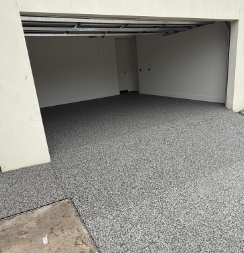
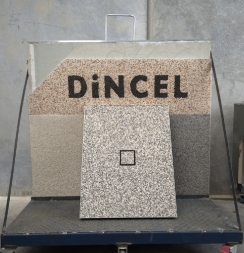
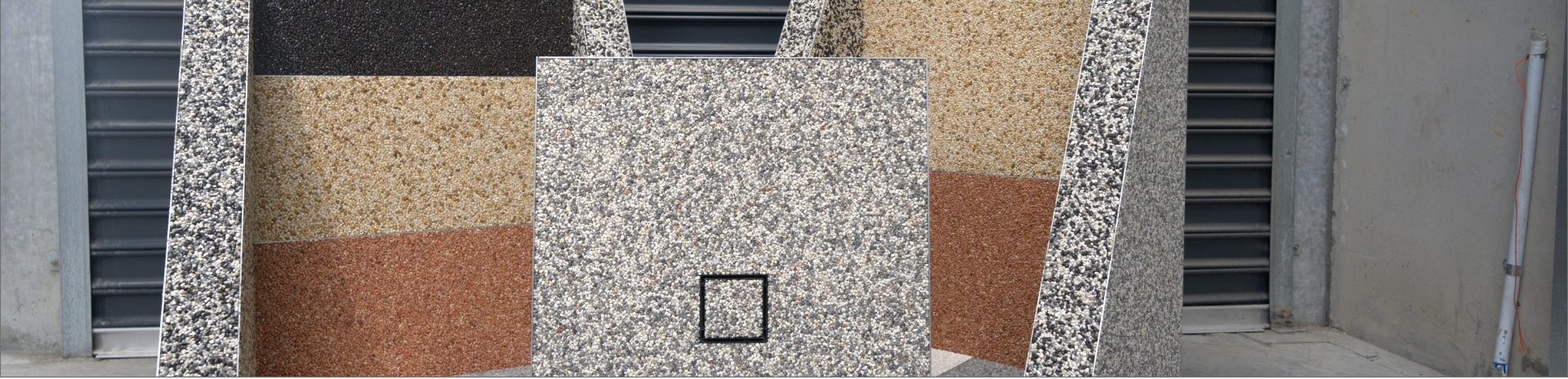
High-Quality permeable Stone Coatings
-

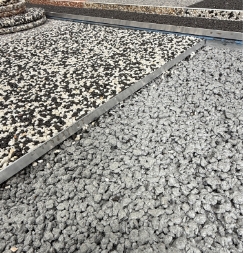
Resin-washed Pool Surrounds
-

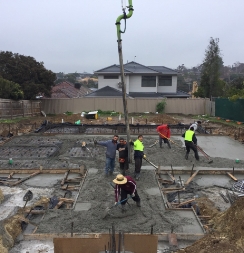
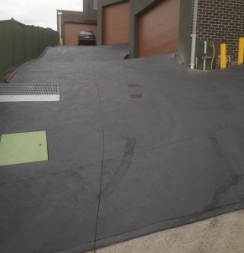
Driveway paving
-

Beauty and Value of Your Home or Business
How Permeable Coatings Help to Meet Council Drainage and WSUD Requirements
The population of Melbourne is growing, and so is the number of hard surfaces in and around the suburbs. Many existing properties have driveways and paths made from traditional materials such as asphalt and standard concrete to prevent rainwater from soaking into the ground, forcing it to run rapidly into stormwater drains. This can overload drainage networks, increase flooding risk, and let pollutants flow directly into rivers, creeks, and beaches.
To address these challenges, many councils and planning authorities now encourage or require Water Sensitive Urban Design (WSUD) measures in new developments. One of the most effective and widely used strategies within WSUD is the use of permeable surfaces, including permeable pavements and coatings.
Permeable coatings allow rainwater to pass through the surface and into the underlying soil or drainage layers, helping developments manage stormwater naturally. From residential driveways, commercial car parks and pedestrian pathways, these systems are being implemented to meet new planning requirements while improving environmental safety.
Below, we’ll explain why many councils are favouring permeable surfaces, how permeable coatings support stormwater management and groundwater recharge, and how they can help projects meet site permeability requirements.
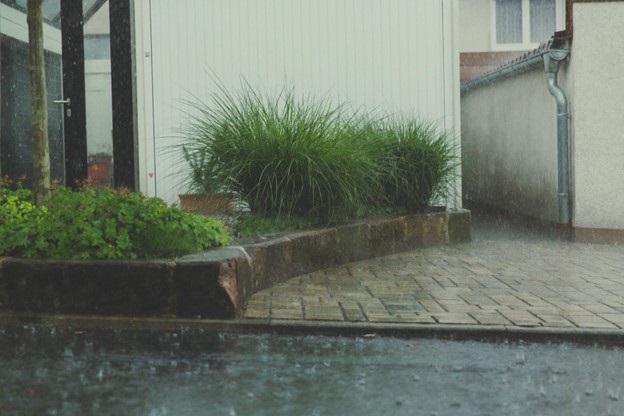
Why Councils and Planners Favour Permeable Surfaces
Modern urban planning is shifting its focus on managing where water falls rather than relying entirely on underground pipes and drains. This principle sits at the heart of Water Sensitive Urban Design (WSUD).
WSUD aims to integrate water management into urban landscapes by slowing water waterflow, filtering out sediment and pollutants, and reusing stormwater through natural processes. Permeable coatings are key tools in this approach because they replace impermeable surfaces with materials that allow rainfall to infiltrate the ground.
Local councils support the implementation of permeable surfaces for several reasons including:
1. Reduced Stormwater Runoff
Traditional concrete and asphalt are designed to make water flow quickly into drains. During heavy rainfall, this sudden burst of water can overwhelm drainage infrastructure and cause localised flooding.
Permeable pavements work differently. Their porous surface allows water to filter through the material into underlying layers of aggregate and soil. This process significantly reduces the volume and speed of stormwater runoff as it seeps into the soil rather than flow off the surface.
In fact, research shows that permeable paving systems can reduce catchment runoff by as much as 67% during typical rainfall events.
2. Protection of Natural Waterways
When rainwater runs across traditional hard surfaces, it picks up nasty pollutants such as oils, chemicals, heavy metals, and sediment before entering stormwater systems. These contaminants often end up in creeks, rivers, and bays that are not just harmful to humans, they cause serious damage to the waterways and local ecology.
Permeable systems are specifically designed to filter water through layers of stone and soil before it reaches drainage systems or groundwater. This process helps trap pollutants and improves the quality of water entering natural waterways.
3. Reduced Pressure on Drainage Infrastructure
Councils often face high costs when upgrading drainage networks to cope with the increasing population and urban development. Permeable paving reduces the need for additional pits, pipes, and detention systems because stormwater is partially managed on site.
In some council projects, the cost of installing permeable surfaces has been far lower than upgrading existing traditional stormwater infrastructure.
4. Alignment with Sustainability Goals
A lot of councils are now implementing environmental goals to their planning strategies to tackle the long-term effects of urban growth. As cities grow, vast areas of asphalt and traditional concrete can interfere with natural water cycles and raise local temperatures. Using permeable surfaces is a clever way to lessen these effects while also promoting wider sustainability goals.
Improved Groundwater Recharge
Permeable coatings allow rainwater to pass through the surface and into the soil below. This helps restore natural infiltration that would otherwise be lost with traditional paving. This helps support groundwater levels and maintain healthier urban landscapes.
Reduced Urban Heat Island Effect
Dense paving materials absorb and retain heat, contributing to warmer urban environments. Permeable surfaces often use lighter aggregates and allow moisture to evaporate through the pavement, helping reduce surface temperatures and improve comfort in built-up areas.
Improved Urban Biodiversity
Allowing water to reach surrounding soil, permeable coating supports healthier vegetation, particularly street trees and landscaped areas. Better soil moisture encourages stronger plant growth and helps create greener urban environments that support local wildlife.
Greater Resilience to Flooding and Drought
Permeable surfaces slow stormwater runoff by allowing rainfall to infiltrate the surface below and be temporarily stored within the pavement structure. This reduces pressure on drainage systems during heavy rain while helping replenish soil moisture and groundwater during dry periods.
How Permeable Coatings Reduce Stormwater Runoff
Permeable coatings are designed with a porous structure that allows water to pass directly through the surface rather than flowing across it.
How the System Works
Most permeable pavement systems consist of several layers:
- Permeable surface layer: This is the visible coating or paving material that allows water to infiltrate through small gaps or nibs.
- Aggregate base layer: Beneath the surface is a layer of clean stone or gravel that temporarily stores stormwater.
- Subsoil infiltration: Once trapped, water gradually infiltrates into the natural soil below or flows slowly toward a drainage outlet.
This layered system acts as a natural filtration and storage structure that slows the movement of water and prevents sudden surges into drainage systems.
Slowing Down Stormwater Flow
Unlike conventional pavements, which send water immediately into drains, permeable surfaces store and release water gradually, like a sponge that absorbs water then releases it into the sink slowly. This delay significantly reduces stormwater flow during heavy rain.
By slowing the flow of stormwater, permeable coatings help reduce flash flooding and downstream erosion.
Supporting Groundwater Recharge
Urban development often interrupts the natural water cycle. In undeveloped landscapes, rainfall infiltrates soil, replenishing groundwater and supporting vegetation.
However, when large areas are covered with impermeable surfaces, rainwater is diverted away before it can soak into the ground.
Permeable coatings help restore this natural process by allowing water to infiltrate through the pavement and into the soil beneath. This contributes to groundwater recharge, which helps sustain aquifers and maintain healthy ecosystems.
Groundwater recharge is especially important in urban areas where vegetation and waterways rely on underground water sources. By promoting infiltration, permeable surfaces help restore a more natural hydrological cycle.
Protecting Tree Root Zones and Urban Vegetation
Urban trees often struggle to thrive because their roots are surrounded by compacted soil or hard surfaces such as concrete and gravel.
Permeable paving provides several advantages for tree health including:
- Improved soil moisture
- Better oxygen flow to root systems
- Reduced soil compaction
- Less root damage from pavement cracking
Permeable pavements can even be installed around tree surrounds, allowing rainfall to reach the soil while still providing a stable walking surface. This helps support healthier urban vegetation and contributes to greener streets.
Practical Ways Permeable Coatings Help Meet Planning Requirements
Many councils require developments to maintain a minimum percentage of permeable surfaces on a site. This requirement helps ensure rainfall can infiltrate naturally rather than being directed entirely into stormwater systems.
Permeable coatings offer a practical way to meet these requirements without sacrificing usable space.
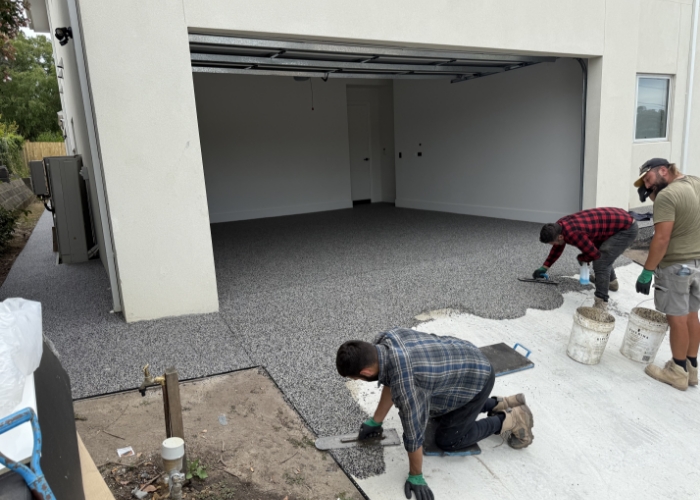
Permeable Driveways
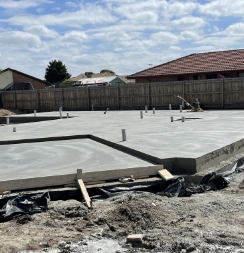
Driveways are one of the most common impermeable surfaces on residential properties. Traditional concrete driveways prevent water infiltration and contribute to stormwater runoff.
Replacing standard concrete with a permeable driveway can significantly increase a property’s permeable surface area and improve rainwater runoff around the property.
This can help new and existing properties meet site permeability targets without reducing parking or access areas.
Permeable Pathways
Pathways around homes, parks, and commercial buildings can also be constructed using permeable coatings.
These surfaces provide the same durability and accessibility as traditional paving while allowing rainwater to drain naturally through the pavement.
For councils and landscape architects, permeable paths are particularly useful in:
- Parks and recreational areas
- School grounds
- Pedestrian walkways
- Garden paths
As they support both drainage and usability, permeable paths are widely used in public infrastructure projects.
A Practical Solution for Modern Urban Development
As Melbourne’s suburban populations grow and climate patterns change, managing stormwater effectively has become a major priority for councils and developers.
Permeable coatings provide a practical solution that balances environmental responsibility with functional design. By allowing rainwater to infiltrate naturally, these systems help:
- Reduce stormwater runoff
- Protect waterways
- Recharge groundwater
- Support healthy urban vegetation
- Reduce pressure on drainage infrastructure
They also allow property owners and developers to meet council permeability requirements without compromising the usability or aesthetics of their sites.
Making a Difference in Water Management
Water Sensitive Urban Design is transforming the way cities manage rainfall and stormwater. By redirecting water away from drainage systems as quickly as possible, modern planning aims to retain, filter, and reuse water within the urban environment.
Permeable coatings play an important role in achieving these goals. By allowing water to pass through the pavement surface and into the ground below, they help reduce runoff, support groundwater recharge, and protect natural ecosystems.
We’re Here to Help
At Permeable Coating, we focus on green permeable paving, resin-washed stone coatings, and resilient surface solutions for residential, commercial, and industrial spaces. With extensive experience and a strong commitment to sustainability, we deliver innovative and attractive surfaces that increase your property’s worth while promoting environmental responsibility.
If you would like to know more about our permeable driveways, permeable paving or resin coating solutions, get in touch with us today for a free quote!


Environmentally Sustainable

Exceptionally Long-Lasting

Resilient to Skid Marks

Flawless, Uniform Finish